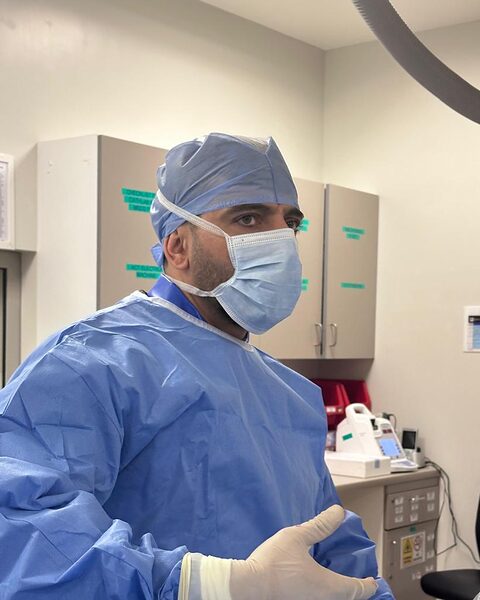
Coronary angiography
A coronary angiogram is an X-ray test that shows the arteries that supply the heart.
Read the guideCoronary angioplasty widens a narrowed heart artery from the inside using a small balloon, and a stent, a fine metal mesh tube, helps keep it open. It is also called PCI. Dr Shady Habboush performs angioplasty and stenting at Saudi German Hospital Dubai, including emergency treatment of heart attacks.
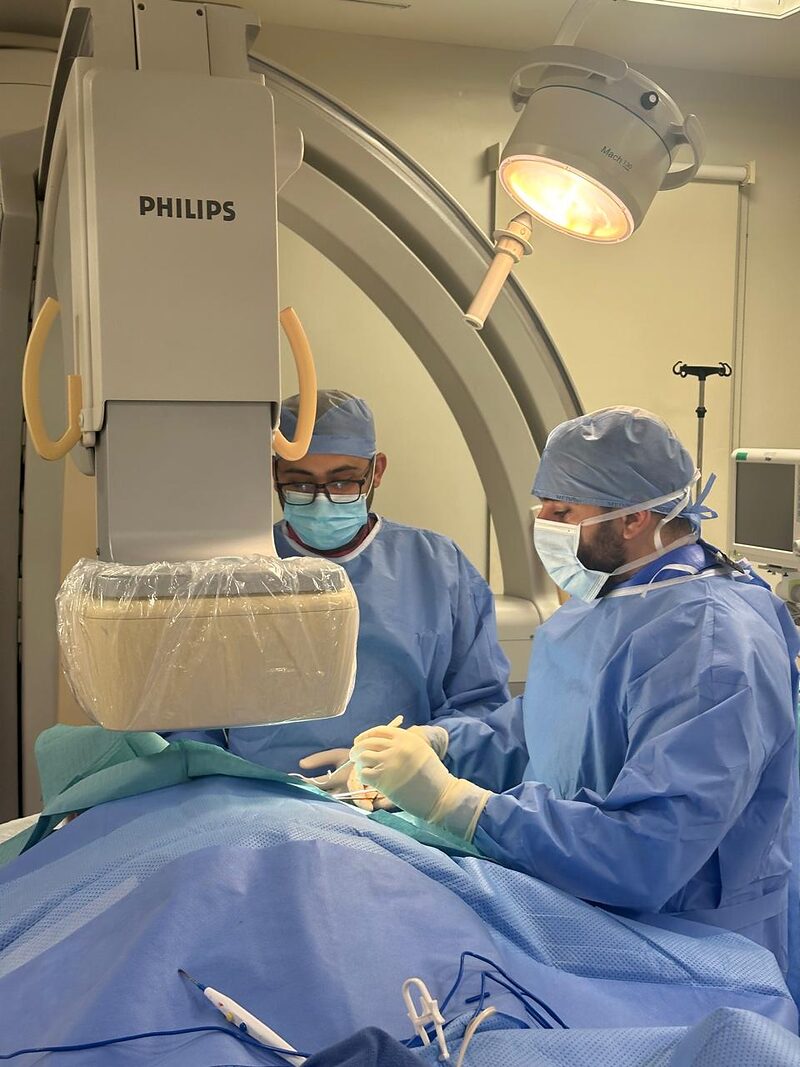
Angioplasty carries risks, including bleeding, damage to the artery, a heart attack or stroke during the procedure, kidney strain from the contrast dye and, later, narrowing or clotting inside the stent. Alternatives include medicines alone and coronary bypass surgery. The choice depends on your arteries and your preferences, and is discussed with you in detail.
The procedure starts like an angiogram, usually from the wrist, under local anaesthetic.
A very thin guide wire is passed across the narrowing.
A small balloon is inflated to widen the artery. You may feel brief chest discomfort while it is inflated.
A stent is placed and expanded against the artery wall. Most stents today are drug-eluting: they release a medicine that lowers the chance of the artery narrowing again.
Intravascular imaging such as IVUS may be used to measure the artery and check that the stent is well expanded.
The catheter is removed and the puncture site is closed with a band or dressing.
Many people stay in hospital for a short period, from a few hours to a night or longer after a heart attack. You will be told when you can drive, work and exercise again.
After a stent, blood-thinning medicines (usually aspirin plus a second antiplatelet medicine for a time) are essential. How long you need both depends on why the stent was placed and on your bleeding risk. Do not stop them without speaking to your cardiologist.
A stent treats one narrowing; it does not cure coronary artery disease. Medicines for cholesterol and blood pressure, not smoking, activity and cardiac rehabilitation protect the arteries in the long term.
It depends. In a heart attack, opening the artery is important. In stable angina, medicines alone are a reasonable first option for many people, and a stent may be added to ease symptoms. Dr Shady explains the options for your case.
The stent stays in place permanently. The artery can narrow again over time, which is why the medicines and lifestyle changes after a stent matter.
Modern coronary stents are generally considered safe for MRI. Always tell the MRI team that you have a stent and carry your stent card.
Angioplasty opens the artery from the inside through a catheter. Bypass surgery uses a blood vessel from elsewhere in the body to route blood around the blockage. It is a heart operation, usually done through the breastbone (open-heart surgery). Some patterns of disease are better suited to one or the other.
Yes. Bring your angiogram CD or report and recent tests. See the second opinion page for what to bring.
A coronary angiogram is an X-ray test that shows the arteries that supply the heart.
Read the guideIntravascular ultrasound (IVUS) uses a tiny ultrasound probe on a catheter to image a heart artery from the inside.
Read the guideA second opinion means another cardiologist reviews your tests and the treatment recommended to you.
Read the guideMedical facts on this page follow the sources below.
Medically reviewed against ESC and NHS guidance · Updated October 2026. General information, not medical advice.
Appointments are made through Saudi German Hospital Dubai, Hessa Street, Al Barsha 3. Consultations in Arabic, English and German.
Chest pain right now? Do not wait for an appointment. Call 998 or go to the nearest emergency department.