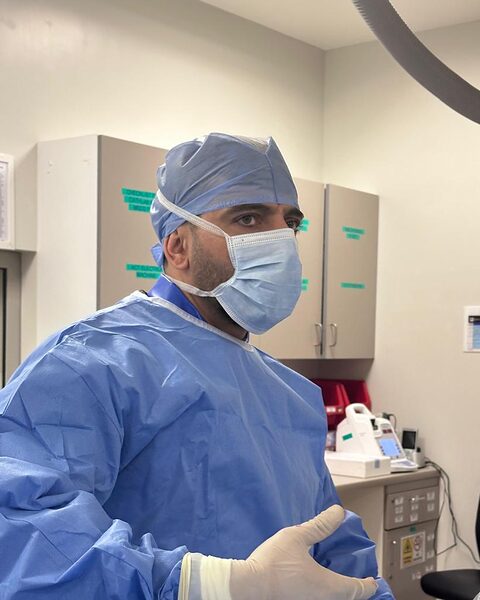
Coronary angiography
A coronary angiogram is an X-ray test that shows the arteries that supply the heart.
Read the guideCoronary artery disease is narrowing of the heart's arteries by fatty plaque. It can cause angina, breathlessness or a heart attack, and it can also be silent. Treatment ranges from lifestyle changes and medicines to stents or bypass surgery. Dr Shady Habboush diagnoses and treats coronary artery disease at Saudi German Hospital Dubai.
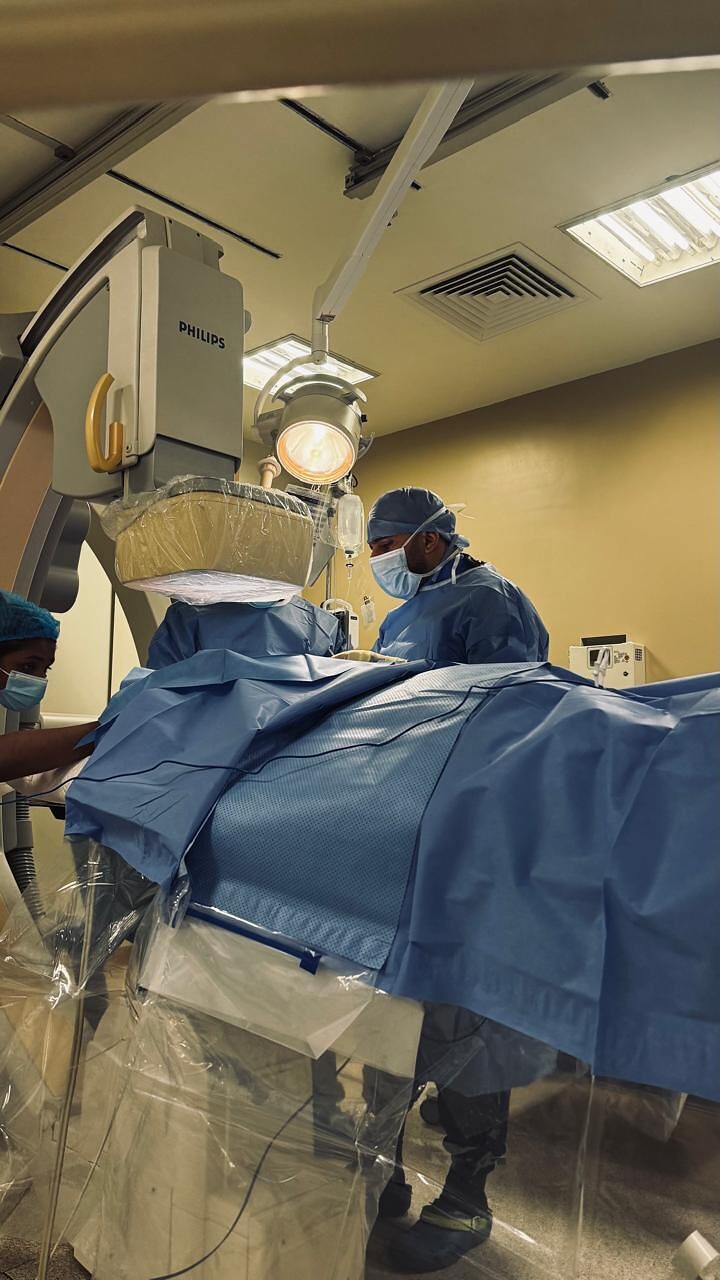
Each treatment has benefits and risks, including the side effects of medicines and the risks of procedures. In stable disease, starting with medicines is a reasonable option for many people. Your options and their trade-offs are discussed with you before any decision.
Assessment of symptoms and risk factors: blood pressure, cholesterol, diabetes, smoking and family history.
ECG and, where needed, an echo.
A test to look for narrowing or reduced blood flow: a CT coronary angiogram, a stress test, or an invasive angiogram.
A shared decision on treatment, based on your symptoms, the pattern of disease and your preferences.
Every plan includes protecting the arteries: not smoking, regular activity, healthy eating, and medicines for cholesterol and blood pressure when needed.
Medicines such as aspirin, statins and anti-anginal medicines reduce symptoms and risk for many people.
Angioplasty with stents or bypass surgery is considered when symptoms persist despite medicines, after a heart attack, or for certain patterns of disease.
| Stable (chronic) disease | Acute coronary syndrome | |
|---|---|---|
| Typical pattern | Predictable chest tightness with effort that settles with rest | New, worsening or rest pain; heart attack |
| What to do | Book an assessment | Call 998 |
| Usual first steps | Medicines, risk factor control, tests | Emergency care, often urgent angiography |
Plaque does not usually disappear, but treatment can slow or stop its growth and lower the risk of a heart attack. Lowering LDL cholesterol strongly is one of the main tools.
Not always. In stable disease, many people do well with medicines. Stents help most with symptoms that persist and in heart attacks.
The diagnostic angiogram is a test that shows whether there is a narrowing. A stent is a treatment that opens the narrowed artery.
Family history raises the risk, especially early heart disease in a parent or sibling. Lifestyle and other risk factors still matter a great deal.
A coronary angiogram is an X-ray test that shows the arteries that supply the heart.
Read the guideCoronary angioplasty widens a narrowed heart artery from the inside using a small balloon, and a stent, a fine metal mesh tube, helps keep it open.
Read the guideLDL cholesterol carries cholesterol into the artery wall, where it builds plaque.
Read the guideMedical facts on this page follow the sources below.
Medically reviewed against ESC and NHS guidance · Updated October 2026. General information, not medical advice.
Appointments are made through Saudi German Hospital Dubai, Hessa Street, Al Barsha 3. Consultations in Arabic, English and German.
Chest pain right now? Do not wait for an appointment. Call 998 or go to the nearest emergency department.